“Access is how, when, where, and how often people have access to the tools, technology, and digital skills necessary to thrive.”
How we access our digital lives is extremely dependent on net neutrality. Although “nothing bad” has happened, yet, that does not preclude something on the horizon. This may not be as bad as the doom and gloom originally predicted, but let’s imagine what the future of media would look like if a few big corporations were in control of all of our media (assuming no antitrust lawsuits are filed that actually win).
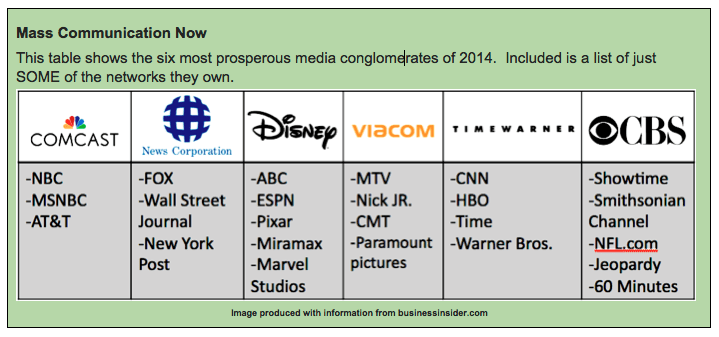
I know the chart above is a bit outdated now, but roll with me (it’s just a prop and this is all hypothetical). Let’s say a multinational conglomerate, like Comcast, acquired Zoom Video Communications. If there were no net neutrality regulations in place, you could be required to have their internet services in order to have Zoom access. So, for your work to have a group meeting on Zoom (or your family to have a Zoom birthday party for the 99-year-old matriarch), every single employee (or family member) has to subscribe to that particular ISP, leaving many unable to attend, or having to pay large fees for temporary access. Oh, and by the way, they also control all the news feeds on your phone/internet browsing, so you will only see news and events that they want you to see (like some dictatorship governments do).
Customer: “I’m trying to log in to xxxxx.com to download a project I was working on, but I keep getting an ‘access to this site denied’ notification.”
ISP: “I’m sorry, that company was purchased by our rival and you can no longer access their website through our services. For an additional $1000 fee we can have all of your data transferred to our new site at yyyyy.com, or you can switch to our rival and we will charge you $2000 for early termination. Have a nice day.”

Yes, I know that’s a bit of an extreme example, but think about how the internet would look if it was only the rich elite that had a voice. Net neutrality comes with responsibility. We can’t be so naïve as to believe what we read/see/listen to without checking the validity of those statements, but we also can’t be afraid to read ideas that we may not agree with, especially statements that come from sources with high credibility.
While working on this assignment I ended up in a discussion with my son (he’s 18) about net neutrality. His immediate opinion was the same argument many use, “nothing bad has happened yet, so why worry about something that may not happen?” (I don’t think he realizes that we live in a state that has maintained a certain amount of net neutrality). I mentioned that the large ISPs needed to make upgrades to their infrastructure for their fast lanes to be feasible, which have been under construction for the last couple of years. So, then I asked, “Now that they are mostly ready to launch, how do you know that we aren’t about to see the changes that were warned about?” He really didn’t like me making him think about it, and pretty much could only come back with the same argument that if nothing bad has happened yet, then it’s not going to.
How about “Although nothing bad has happened yet, why couldn’t it?” Getting down to only six or so major conglomerates running everything isn’t that likely to happen, but I like the take on it that I read in this article from the Entertainment Strategy Guy.
I’m not saying anything catastrophic is going to happen, but why wait until it’s too late to fix it when we can keep some safeguards up instead?
 Cyndi's Media Class
Leave a comment